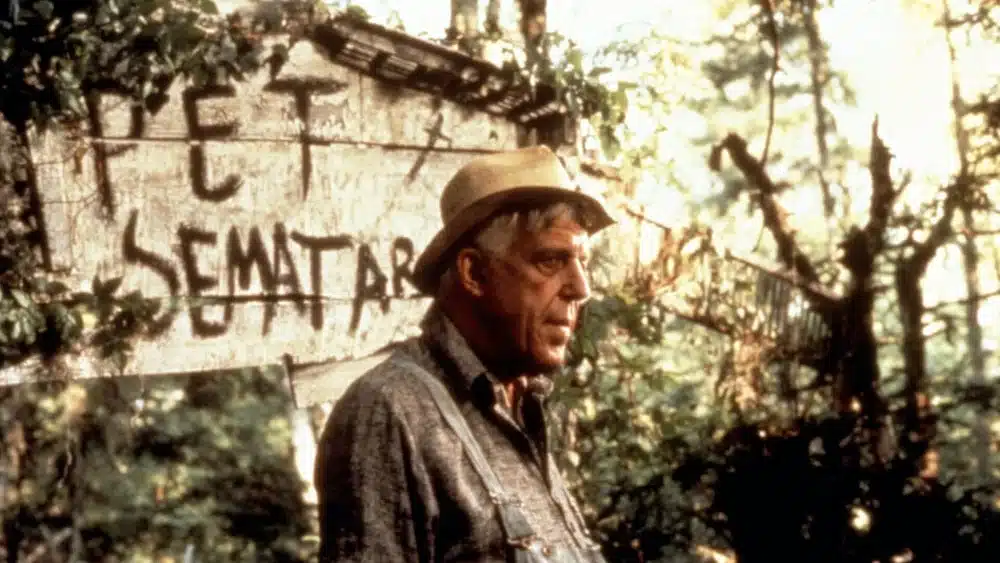
There are Stephen King stories about haunted hotels, killer cars, telekinetic teenagers and ancient evils hiding beneath small towns.
And then there’s Pet Sematary.
Its horror is painfully simple.
Someone you love dies. You discover that you might be able to bring them back. And somewhere between those two facts, common sense doesn’t stand a chance.
That idea was already brutal on the page in 1983. Six years later, director Mary Lambert turned it into one of the darkest mainstream horror movies of the late ’80s. Three years after that, she came back, but Pet Sematary Two wasn’t interested in doing the first movie again. Stephen King wasn’t writing it. The Creed family was gone. The solemn dread gave way to teenage anger, grotesque humor and Clancy Brown having an absolutely unhinged good time.
Put the two movies beside each other today and they make for a fascinating double feature. Same director. Same town. Same terrible patch of earth. Two very different ideas about what happens when people refuse to leave the dead alone.
Before Mary Lambert, There Was George Romero
Pet Sematary almost belonged to George A. Romero. He’d developed a relationship with King through Creepshow, and King initially sold him the rights but Romero got tied up with Monkey Shines reshoots just as the project needed to move. So Paramount went looking elsewhere.
Enter Mary Lambert, not a horror-factory director, but a Rhode Island School of Design painter turned MTV-era music video pioneer, known for Madonna’s Borderline, Like a Virgin and Like a Prayer. Then her agent sent her King’s script.
What grabbed her wasn’t the chance to make something frightening. It was the family. Lambert has described Pet Sematary as a family drama about obsession and death. The love holding a family together becomes the very thing capable of destroying it. Because this was never really a movie about zombies. It’s about grief making intelligent people do irrational things.
Stephen King Takes His Own Story to the Screen
King wrote the screenplay himself and stayed closely involved through production, which shot in Maine as he’d stipulated when selling the rights. Lambert has said she discussed changes with him rather than rewriting his material solo.
That closeness shows. The movie is weird, bleak, occasionally awkward and then suddenly it produces an image that burns into your brain. Church, returned. Victor Pascow, gruesome guardian angel. That truck roaring down the road. Zelda. Gage Creed.
It isn’t polished in the usual cinematic sense. Lambert gives it something closer to a nightmare remembered years later, where certain pieces stay startlingly vivid and others feel strange and unreal, a quality that’s probably helped it age.
Want to spend a little more time with the original? Head into the VHS Vault for our full look at Mary Lambert’s 1989 horror classic.
Visit the VHS Vault →Pet Sematary and the Horror of Grief
Death. Not movie death. The irreversible kind.
King’s idea doesn’t remove death from the story, it makes accepting it harder. Louis Creed isn’t handed a magic resurrection machine and turned into a mad scientist. He’s given something far more dangerous: hope. He’s already seen the burial ground work; Church died, Church came back, wrong but back. So when the unimaginable happens to Gage, we understand exactly why Louis starts walking toward a decision everyone watching knows he shouldn’t make.
The movie doesn’t ask whether resurrecting Gage is sensible. Of course it isn’t. It asks whether a grieving parent could actually resist trying. That’s the nastier question.
Childhood, Death and the Pet Sematary
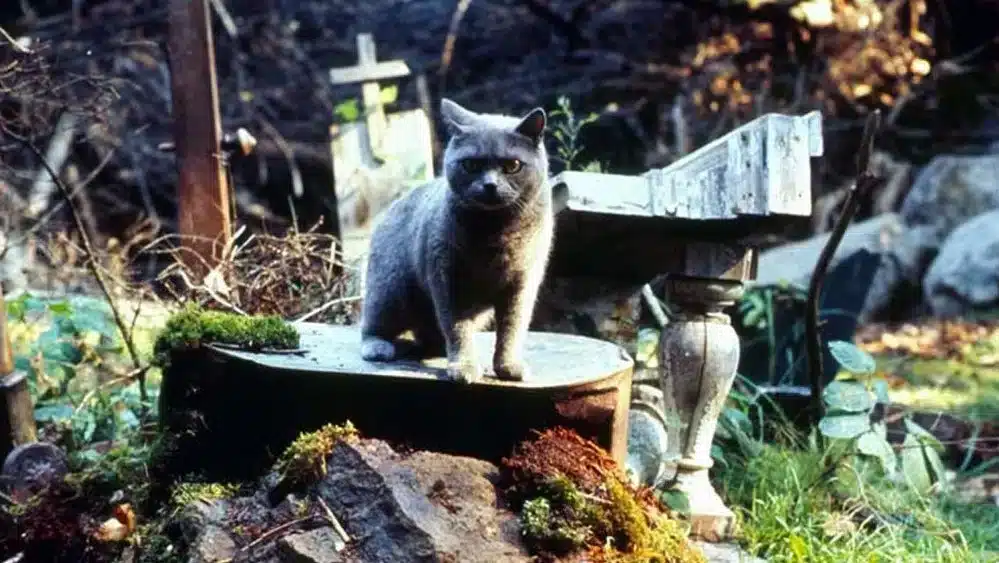
Lambert has talked about the pet cemetery itself as something recognizable: for many kids, losing an animal is their first real encounter with mortality. That makes the misspelled little graveyard more than creepy production design, it’s practically a training ground for grief. Kids bury cats, dogs, rabbits and goldfish there because they’re learning what adults spend their whole lives negotiating: things die, and loving them doesn’t change that.
The burial ground beyond it offers the opposite lesson, maybe death doesn’t have to be permanent. And that’s where everything goes wrong.
Why Zelda Still Haunts Pet Sematary
You can’t discuss the film’s cultural afterlife without her. Rachel’s memories of her sister sit almost apart from the central supernatural story, yet they contain some of the movie’s most disturbing imagery. Zelda was written as a teenage girl with spinal meningitis; Lambert cast adult male actor Andrew Hubatsek in the role, believing it would make her more frightening and uncanny. Mission accomplished.
Zelda also does larger work: Rachel has spent her life terrified of death because her childhood encounter with it was traumatic, grotesque and tangled up with guilt. Louis responds to death by trying to defeat it. Rachel responds by refusing to confront it. Different reactions, same terror. That’s Pet Sematary.
Pet Sematary Finds Its Audience
Pet Sematary wasn’t greeted in 1989 as a universally recognized classic. The Washington Post dismissed it as bland and clichéd, while the Los Angeles Times was more receptive, praising Lambert’s willingness to follow King into genuinely disturbing territory.
Audiences had other ideas. The movie opened at number one with about $12 million from 1,585 theaters, an unusually strong opening for that spring release window. People showed up, and more importantly, they remembered it: Church, Pascow, Zelda, Gage under the bed, Fred Gwynne’s wonderfully ominous Jud Crandall, and one line that became permanently attached to the franchise…”sometimes dead is better.”
By 1992, Paramount wanted to go back to Ludlow. So did Lambert. Just not quite the way the studio wanted.
The Pet Sematary Sequel That Almost Happened
This might be the most interesting piece of the sequel’s history. Lambert wanted Ellie Creed back, following her as a young woman returning to Maine to discover what had happened to her family, a remarkably direct continuation, the surviving Creed child returning to the place that destroyed everyone she loved.
It never happened. Lambert has said the studio didn’t want the sequel built around Ellie; Paramount developed another story instead, and Lambert worked with what became Pet Sematary Two. That decision changed everything. Instead of continuing Louis Creed’s story through his daughter, the sequel starts over with another grieving child: Jeff Matthews, played by Edward Furlong almost immediately after Terminator 2 made him one of Hollywood’s most recognizable young actors.
Pet Sematary Two Changes the Perspective
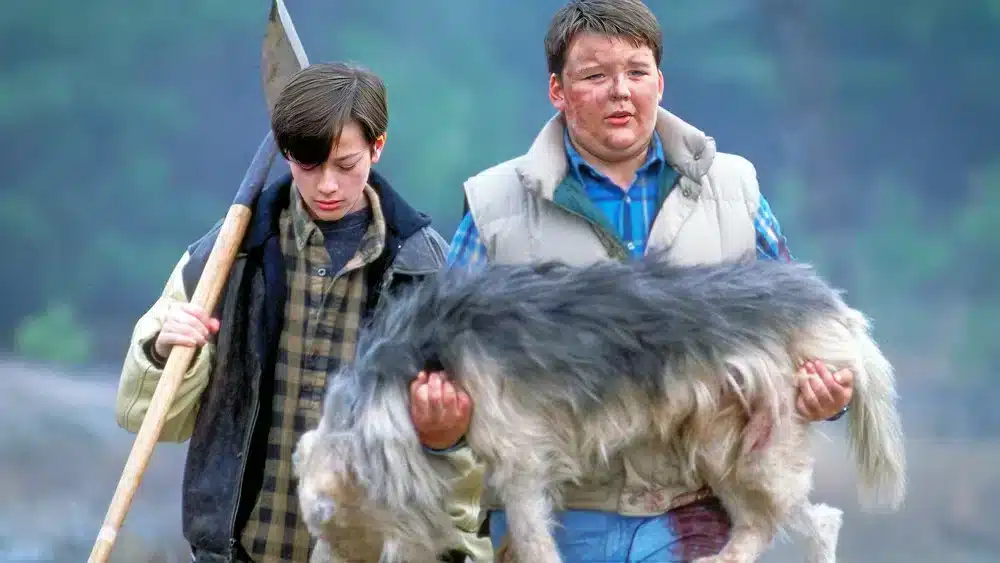
The first movie looks at death largely through adults. The sequel looks at it through kids. Jeff loses his mother. Drew Gilbert lives with an abusive stepfather. These aren’t adults making philosophical decisions about mortality, they’re adolescents stuck in situations they don’t control.
The burial ground changes with them. In the first movie it represents temptation. In the second, it starts to look like power. Very early-’90s idea. King wasn’t involved this time, and Lambert deliberately leaned into irreverence and dark comedy. She has described the premise almost mischievously: imagine the nightmare of an awful disciplinarian stepfather, then imagine him coming back as a zombie.
Clancy Brown and the Strange Energy of Pet Sematary Two
Gus Gilbert is exactly the character the sequel needed. Brown doesn’t play him with the mournful restraint of the first film he goes big, threatening, funny, mean. Once Gus comes back from the burial ground, Brown seems to understand exactly what kind of movie Lambert is making, and the performance becomes the bridge between horror and pitch-black comedy. Even critics who weren’t crazy about the film noticed: Kevin Thomas’s Los Angeles Times review singled Brown out for holding together its abrupt shifts between cruelty and bizarre humor.
It isn’t trying to recreate Fred Gwynne whispering warnings about the burial ground. It’s practically kicking open the cemetery gates. The poster said it best: raise some hell.
Horror Changes Between 1989 and 1992
Only three years separate these movies. They feel farther apart. Pet Sematary arrived in April 1989, at the tail end of the great ’80s horror boom. Pet Sematary Two arrived in August 1992, by which point the major slasher franchises were running out of gas. Freddy and Jason weren’t the cultural events they’d once been, and horror was drifting through that strange early-’90s stretch before Scream would give the genre its next jolt.
Youth culture had shifted too, and the sequel feels plugged into that transition: louder, more cynical, more interested in alienated kids than suburban parents. The first film says death is inevitable. The sequel practically responds: yeah? Screw that. Same cemetery, different generation.
Pet Sematary Two Got Buried
The sequel didn’t repeat the original’s success, opening in late August 1992 and making roughly $17 million worldwide; a steep drop. Critics weren’t especially kind, though some recognized something more interesting underneath the zombie mayhem: the Los Angeles Times argued that while it wasn’t nearly as frightening as the original, it worked through the anxieties of being thirteen in exaggerated mythic terms.
That’s closer to what Lambert was actually attempting than “inferior sequel.” She’s said she wanted to make a dark comedy centered on adolescent characters, and acknowledged the idea wasn’t completely realized. That’s probably the fairest read: messy, tonally nuts, meaner and funnier than the original, and sometimes surprisingly effective. Very early-’90s horror.
What If It Hadn’t Been Called Pet Sematary Two?
Here’s a question worth sitting with.
Would Pet Sematary Two be remembered differently if it hadn’t been called Pet Sematary Two?
Because that title comes with baggage. It promises a continuation of the movie audiences saw in 1989.
That’s not really the movie Mary Lambert made.
What audiences got instead was closer to a spiritual cousin wearing the family name. A movie that spent its whole run being measured against a movie it was never trying to be. Give it a title of its own, and the reviews probably stop being built entirely around “not as good as the original.” The box office might not change. The conversation around it might.
It’s the curse of a lot of horror sequels that swing hard on tone: the name buys the opening weekend, then spends the rest of the movie working against you.
Two Movies Built Around the Same Impossible Wish
Strip away Church, the trucks, the scalpels and the resurrected stepfathers, and both movies return to the same idea: I want them back. Louis wants Gage back. Jeff wants his mother back. The burial ground never forces anyone to use it, it simply waits. Someone grieving eventually does the rest.
Lambert approached that temptation from opposite ends of childhood. In Pet Sematary, adults are trying to protect children from understanding death. In Pet Sematary Two, the children already understand that adults can’t protect them from much of anything. That’s a fascinating progression for two movies usually filed as “the classic one” and “that weird sequel with Edward Furlong.” They’re stranger and more connected than that.
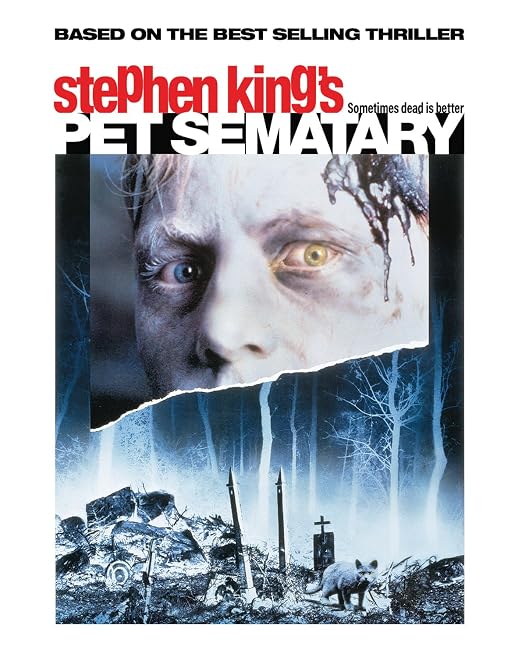
Pet Sematary (1989) Limited Edition Steelbook
Want Mary Lambert’s original on the shelf? This Limited Edition Steelbook brings Pet Sematary to 4K Ultra HD with a Blu-ray and digital copy in collectible Steelbook packaging.
Includes: 4K Ultra HD + Blu-ray + Digital Copy
Check Price & AvailabilityMary Lambert Connects Both Pet Sematary Movies
That’s why these two deserve to be revisited together, not because they’re equal, or even trying to do the same thing, but because Lambert returned to the same supernatural idea at two very different points in her career and found another way in.
The first film was a major commercial success, three weekends at number one, but Lambert has said the industry’s response was different than it would’ve been for a male director; rather than opening doors, it mostly got her offered more horror. So when she returned to Ludlow, she didn’t resurrect the first movie. She messed with it, changed the perspective, the tone, the generation.
Maybe that’s appropriate. Pet Sematary was never really about bringing something back exactly as it was. It was about what happens when it comes back different.
More than three decades later, the original has become genuine horror iconography, while its strange, unruly sequel keeps crawling out of the dirt whenever a new generation discovers it. Which feels about right.
After all, Jud Crandall tried to warn us. Sometimes dead is better. Nobody said horror fans had to listen.