Some horror icons chase their victims. Others wait inside the mirror.
Say his name five times and Candyman appears. Not simply as a killer, but as a story given flesh. A hook scrapes against the wall of an abandoned apartment. A swarm of bees stirs behind a closed door. Somewhere, a kid dares a friend to say it one more time, because the rule everybody knows is that saying it four times doesn’t count.
When Tony Todd first stepped into the role in 1992, horror got a monster it had never quite had before: one who spoke in full sentences, moved like he had nowhere to be, and made the audience lean toward the mirror instead of away from it. Candyman didn’t need a mask or a one-liner. Todd’s voice did the work a machete usually does. This is the Candyman trilogy ranked.
The original trilogy carried that legend from Cabrini-Green in Chicago to New Orleans during Mardi Gras and finally to Los Angeles on Day of the Dead. Neither sequel recaptured the strange spell of the first film, but both kept Todd at the center, and that turned out to be enough to keep the legend breathing.
This ranking covers the original Tony Todd trilogy released between 1992 and 1999. The 2021 Nia DaCosta film exists in its own branch of the mythology and isn’t part of this list.
Franchise Snapshot
Unlike most slasher franchises, Candyman was never an arms race of increasingly elaborate kills. Its real weapon was ritual, a name, a mirror, a count to five. That’s a fragile thing to build a franchise on, and the sequels prove it. Every time the mythology gets a little more explained, it gets a little less dangerous.
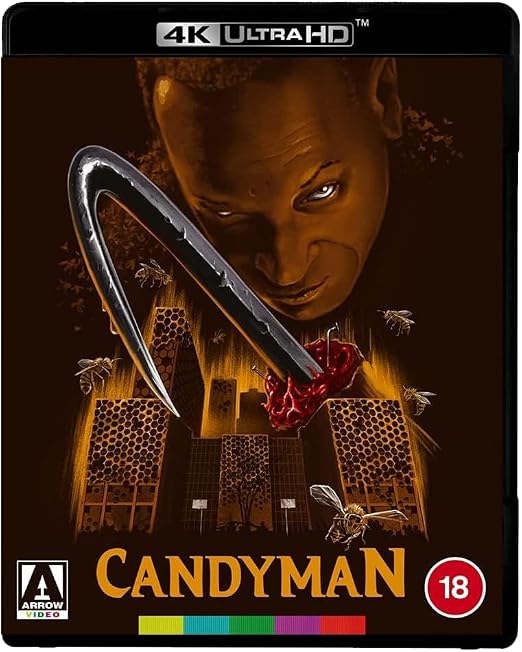
Add Candyman to Your Collection
The 1992 original is the non-negotiable purchase. Look for a release with a proper 4K or Blu-ray restoration, Bernard Rose commentary, and retrospective interviews — the practical bee effects deserve to be seen at full clarity, not compressed into a decade-old DVD transfer.
Trilogy sets are worth it for completists, but don’t settle for a bare-bones disc on the film that matters most.
View the Collector’s EditionTony Todd Gave the Legend a Soul
Candyman could have been another one-note supernatural killer. Todd refused to play him that way, and you can see the choice in something as small as how he enters a scene: never running, never announcing himself with a jump scare sting. He’s already in the room before Helen realizes it, standing with the stillness of someone who has been waiting a hundred years and can afford to wait a hundred more.
That patience is what separates him from the crowded slasher field of the early ’90s. Michael Myers stalks. Jason lurches. Candyman is summoned, he doesn’t chase you; you invite him, which makes every kill feel less like an attack and more like a debt being collected.
Todd’s commitment mattered even more once the sequels started cutting corners. Budgets shrank, explanations piled up, but he never once played the part like a paycheck. Whatever the script gave him, he delivered it in that same unhurried baritone, like the movie around him was beneath his notice.
Every Original Candyman Movie Ranked
The mirror is ready. The candles are lit. We’re going from the weakest reflection to one of the great supernatural horror films of the ’90s.
Candyman: Day of the Dead
1999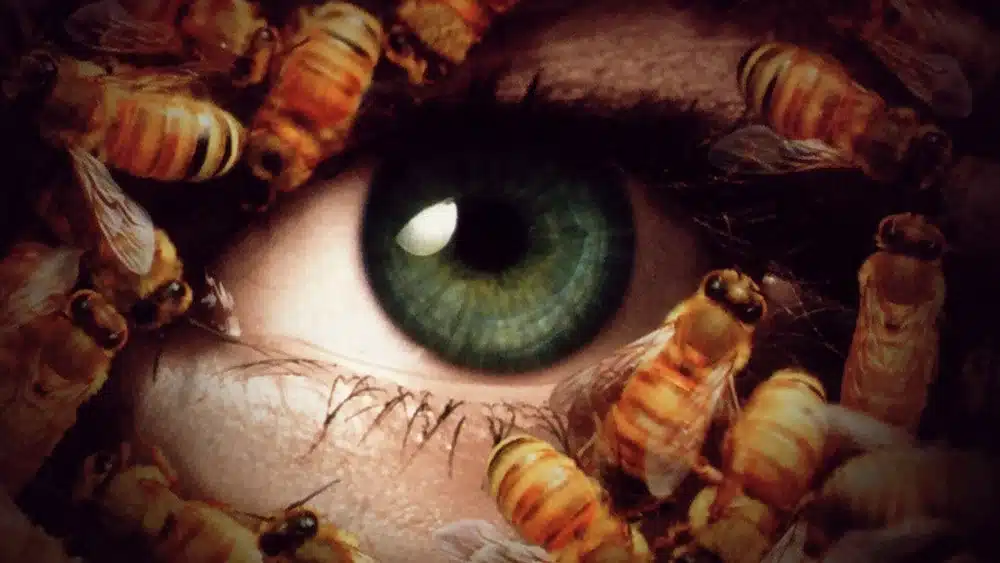
Give the premise credit: Caroline believes Daniel Robitaille’s art can restore his humanity, while Candyman wants her to accept the bloodline and join the legend outright. History versus myth is a real idea for a third chapter to chase.
The execution doesn’t chase it very far.
This was shot on roughly a tenth of the theatrical budget and directed straight for the video shelf, and it looks it. Scenes that should feel ceremonial, a gallery opening, a police interrogation, are lit and blocked like a procedural rerun. The Day of the Dead setting, which should have handed the film built-in imagery of altars, marigolds, and painted skulls, gets treated as background dressing instead of the thematic gift it is.
Donna D’Errico plays Caroline with real conviction, but she spends most of her screen time insisting Candyman isn’t real to an audience that already sat through two movies proving otherwise. That’s a losing argument to hand your lead.
Then Todd shows up, and the movie briefly remembers what it’s supposed to be. There’s a moment where he tells Caroline she can’t outrun a story that’s already been told about her, and for about ninety seconds, the film has teeth again.
Fun Fact
Day of the Dead skipped theaters entirely and went straight to video — a first for the franchise. It was also the last Candyman film for over two decades until the 2021 legacy sequel arrived, making Tony Todd’s performance here his final word on the character for 22 years.
As a finale, it’s frustrating because it understands what Candyman’s legacy should involve, art, bloodlines, belief, and just doesn’t have the budget or the direction to make any of it sing.
Candyman: Farewell to the Flesh
1995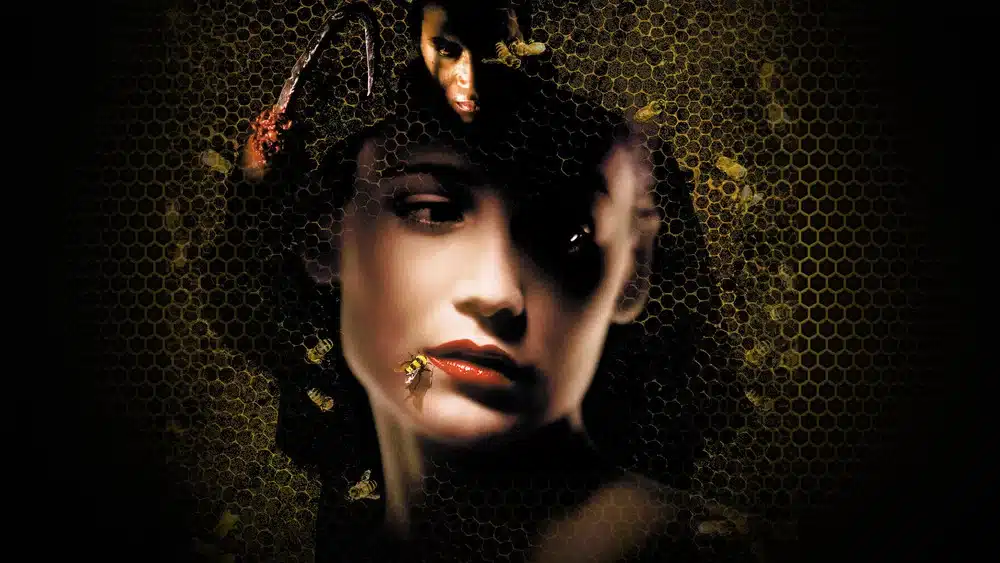
Following a film as strange and singular as the original was never going to be easy, and director Bill Condon made the one move that could actually work: instead of trying to rebuild Cabrini-Green’s exact atmosphere, he moved the legend somewhere with its own ghosts. New Orleans doesn’t imitate the first film’s dread; it earns its own.
The decaying mansions, above-ground cemeteries, and Mardi Gras crowds fit Candyman like they were built for him. This is a city that already tells ghost stories about itself; dropping a mirror-dwelling legend into it barely requires suspension of disbelief.
The film also digs deeper into Daniel Robitaille’s backstory than the original ever did. His murder, his art, the object tied to his power. That’s a real gift for Tony Todd, who gets more to play than “menacing” this time around. But it’s also where the sequel loses something. The first film left just enough unexplained that Candyman felt limitless. Was Helen investigating a ghost, losing her mind, or being written into a story that had already decided her ending? Farewell to the Flesh answers that question a little too completely, and a fully explained monster is, almost by definition, a smaller one.
Kelly Rowan gives Annie enough backbone that the investigation feels personal rather than repetitive, and Todd is more openly romantic here, more visibly wounded by his own history. The exposition costs the film some mystery, but Todd sells the emotional trade.
Extra Trivia
Composer Philip Glass was reportedly unhappy with how his score from the original was reused and altered for the sequel, and has spoken publicly about disliking the final product — a rare case of a horror franchise’s own composer disowning part of his own work.
It can’t match Bernard Rose’s eerie ambiguity, but it’s a far better film than its “forgettable ’90s sequel” reputation suggests. It respects the character, expands the mythology without abandoning it, and gives Todd a genuinely worthy stage.
Candyman
1992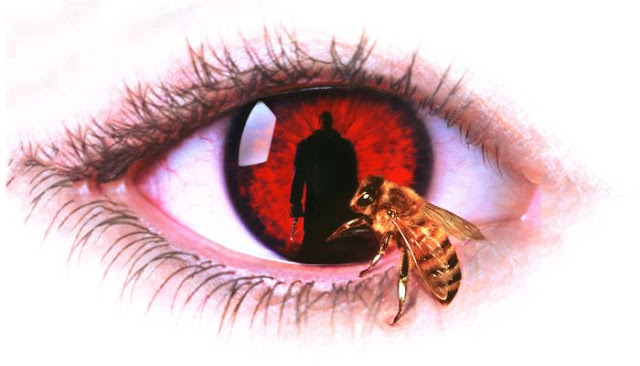
The original Candyman doesn’t feel assembled from familiar horror parts. It feels like a nightmare someone was already having and simply pointed a camera at.
Bernard Rose adapted Clive Barker’s short story “The Forbidden,” relocated it from Liverpool to Chicago, and built a specifically American ghost story out of race, housing inequality, and the stories a neglected community tells itself to explain its own scars. That’s a heavier foundation than horror usually bothers with, and it’s a big part of why the film still gets written about decades later.
Virginia Madsen carries the film as Helen, an academic who starts out treating Candyman as thesis material; something to study from a safe, well-funded distance. The residents of Cabrini-Green live inside the consequences of the legend every day; Helen assumes she can visit, take notes, and drive home.
The film spends two hours dismantling that assumption.
Helen’s research becomes obsession, then isolation, then total surrender, and Madsen sells every inch of that slide even in the film’s final act, when reality itself is coming apart around her, the performance never tips into camp.
Todd doesn’t appear constantly, and that restraint is the whole trick. When Candyman finally speaks, his voice arrives in the room before he does; low, unhurried, almost tender, and it’s that tenderness that makes the hook so much worse when it finally shows up. He isn’t just hunting Helen. He wants her belief, and eventually her participation in the myth itself.
Philip Glass’s score does as much heavy lifting as the performances. Organs and choral voices turn parking garages and gutted apartment hallways into something closer to a cathedral; sacred spaces built for a very dark kind of faith.
The Cabrini-Green setting gives the film a physical weight no studio backlot could fake. The corridors and graffiti aren’t atmosphere for atmosphere’s sake, they tie the supernatural story to a real community too often flattened into headlines and assumptions. The film isn’t flawless in how it handles that material, and its lens stays centered on Helen rather than the community itself, but it’s still reaching for something well outside the usual slasher playbook, and that reach is a big part of why the conversation around it hasn’t stopped.
Legacy
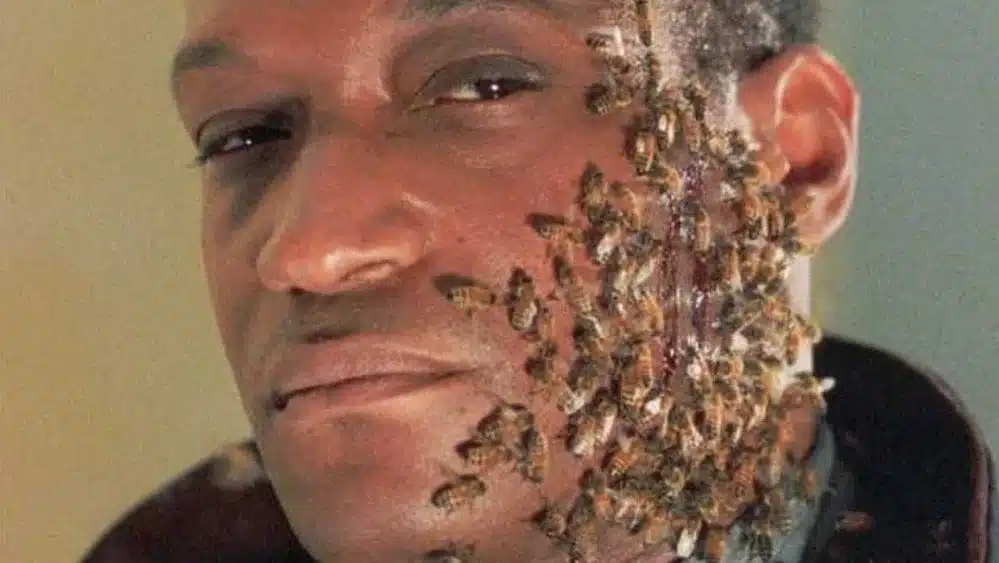
The film’s most iconic image — Candyman standing calmly as live bees crawl across his face and mouth — used real bees on set, with Tony Todd reportedly stung multiple times during filming and paid a bonus for every sting. He also learned actual beekeeping techniques to stay calm during the shoot.
Three decades later, it remains one of the defining images of ’90s horror, and one very few actors would agree to shoot the same way today.
The finale completes Helen’s transformation from researcher to myth herself. She enters Cabrini-Green believing a story can be observed from a safe distance, and she leaves as the story.
That’s the real reason Candyman still works: legends don’t stay owned by the people who create them. They belong to everyone who repeats them.
More than three decades later, the hook still draws blood, but belief is still Candyman’s sharpest weapon.
How Candyman Changed Across the Trilogy
The trilogy starts as a dreamlike urban ghost story and gradually settles into a more conventional supernatural franchise. Each sequel adds more backstory, clearer rules, and another descendant to chase and each explanation quietly trades away a piece of the mystery that made the character so unnerving in the first place.
The original presents Candyman as something shaped almost entirely by belief. His history is there, but the uncertainty around him is what makes the legend feel bottomless.
Farewell to the Flesh digs into Daniel Robitaille’s actual past and ties him directly to a bloodline of descendants. That gives the sequel real emotional stakes, but it also converts some of the unknown into a rulebook.
By Day of the Dead, the franchise has fully become a bloodline story. Candyman is still dangerous whenever Todd is onscreen, but the legend no longer feels like it could be waiting behind any mirror in the world. It’s been narrowed down to one family’s problem.
Candyman Trilogy: Frequently Asked Questions
Fresh Thrills Franchise Report Card
Our final grades for the original Candyman trilogy.
Shelf Worthy?
YESTony Todd’s original legend deserves a permanent place in every serious horror collection.
Candyman Collector’s Edition
After revisiting the full original trilogy, there’s no real debate about which film belongs at the center of the shelf. The 1992 original is the essential edition to own.
Look for a release with a strong restoration and real archival material covering Bernard Rose’s direction, Tony Todd’s performance, and the practical effects that made the film unforgettable.
Add Candyman to the ShelfRewind complete. The mirror has gone dark, the bees have returned to the hive, and Candyman is back on the shelf, waiting for someone to say his name again.
You Might Also Like
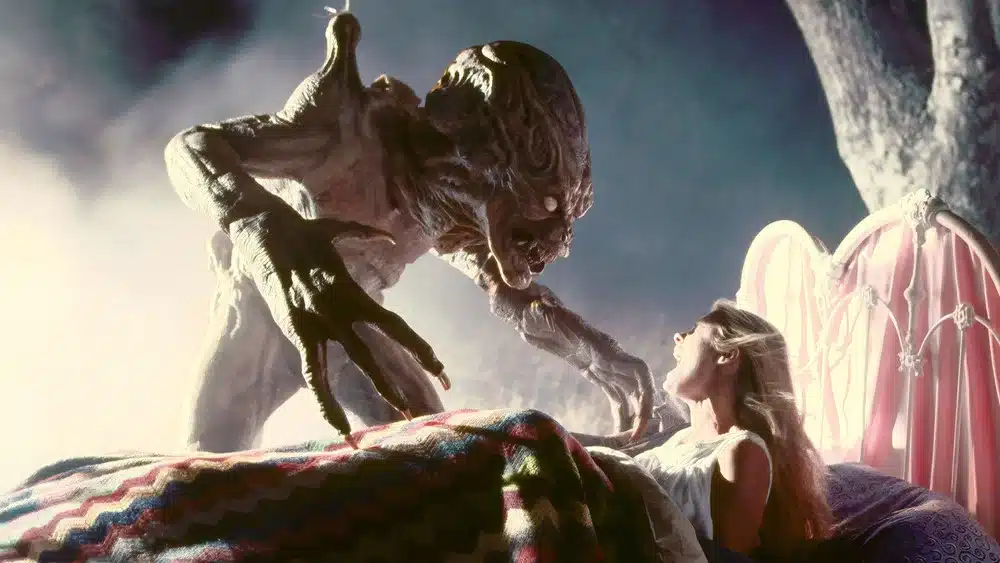
The Complete Pumpkinhead Franchise Ranked
Another tragic horror icon takes center stage as we rank every Pumpkinhead film, explore Stan Winston’s unforgettable creature, and decide which sequels deserve a place on your shelf.
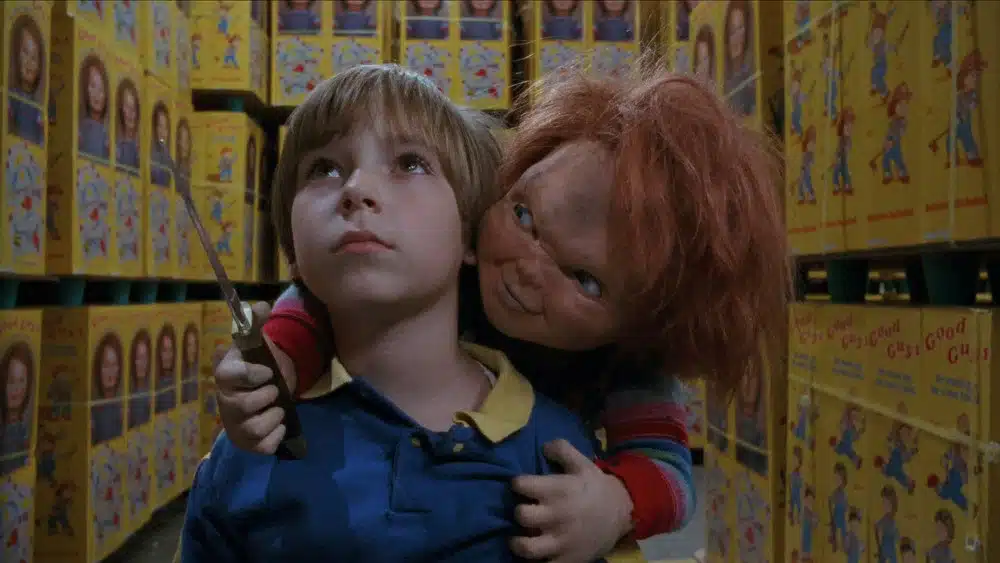
7 Essential Horror Sequels from the ’80s and ’90s
Some sequels deserve far more respect than they receive. These seven follow-ups prove that horror franchises sometimes save their best surprises for later.