
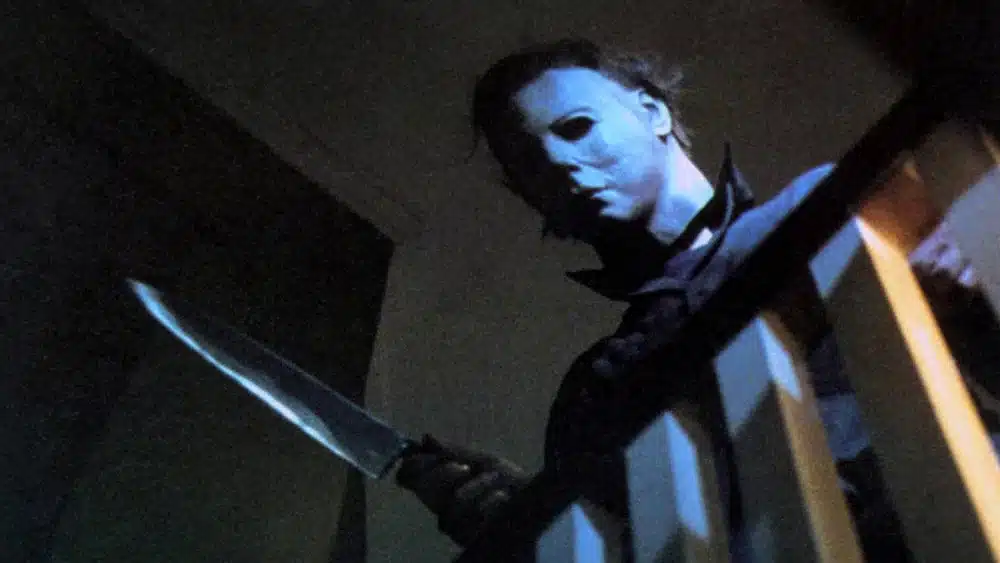
The night HE came home.
October 31, 1978. Haddonfield, Illinois.
Kids are carving pumpkins. Teenagers are making plans. Parents are getting ready for another perfectly ordinary Halloween night.
And somewhere in the neighborhood, a man wearing a white mask is watching.
That’s all John Carpenter really needs.
I usually don’t do the 70s classics, but since it is Halloween night 2026, I must speak on this fun horror flick.
Before Jason Voorhees turned Crystal Lake into a terrible vacation destination, before Freddy Krueger made bedtime a dangerous proposition, there was Michael Myers. No elaborate costume. No wisecracks. No explanation for why he seems so interested in the people of Haddonfield.
Just a pale, expressionless face appearing where it absolutely shouldn’t be.
Halloween (1978) is the rare horror movie that can make an ordinary residential street feel threatening in broad daylight. A figure standing near a hedge. A car slowly passing. Someone looking out a classroom window and seeing something that wasn’t there a moment ago.
Carpenter knows exactly how long to let those moments linger.
Jamie Lee Curtis makes her feature-film debut as Laurie Strode, a responsible high school student whose plans for Halloween night involve babysitting rather than partying. Donald Pleasence plays Dr. Sam Loomis, a psychiatrist who understands that the man he’s pursuing is far more dangerous than the authorities realize.
And then there’s that music.
Those few piano notes are practically enough to make you check the locks.
Nearly fifty years after its release, Halloween remains a masterclass in getting an enormous amount of suspense out of very little. Carpenter didn’t need an army of monsters or elaborate effects.
He needed a mask, a neighborhood and the uncomfortable feeling that somebody might be standing just outside your window.
On Halloween night, that’s more than enough.

Halloween (1978)
Michael Myers escapes from a psychiatric hospital and returns to Haddonfield on Halloween night. John Carpenter’s legendary slasher introduces Laurie Strode, Dr. Loomis and one of the most unsettling masked figures in horror history.
Rent or Buy on AmazonAs an Amazon Associate, Fresh Thrills earns from qualifying purchases.
Vault Quick Stats
- Haddonfield Neighborhood Watch: Severely Understaffed
- Michael Myers Conversation Skills: Nonexistent
- Dr. Loomis Stress Level: Through the Roof
- Babysitting Pay: Not Nearly Enough
- Halloween Night Curfew: Should Have Been 6 PM
Fun Fact: Michael Myers’ famous white mask began life as a Captain Kirk mask from Star Trek. Production designer Tommy Lee Wallace modified the mask, enlarged the eye holes, altered the hair and painted it a pale color. A few simple changes turned a familiar television face into one of horror’s most recognizable images.
Extra Trivia: Despite taking place in Illinois during autumn, Halloween was filmed largely around Southern California in the spring. The crew scattered artificial autumn leaves around the locations, then gathered them up to reuse for subsequent shots. They also had to carefully avoid palm trees in the background. Apparently, making California look like the Midwest required almost as much dedication as escaping Michael Myers.
Legacy: Halloween didn’t invent the slasher movie, but its enormous success helped establish the formula that would dominate much of the following decade. The masked stalker, the suburban setting, the resourceful young heroine and the suspenseful pursuit became familiar ingredients in countless horror films. Yet Carpenter’s original still feels remarkably restrained compared with many of its successors. Michael Myers became a franchise, Laurie Strode became a horror legend, and Halloween night itself was never quite the same.
“The scariest thing in Haddonfield isn’t what Michael Myers does. It’s how quietly he waits.”
Why Halloween Is Worth Renting
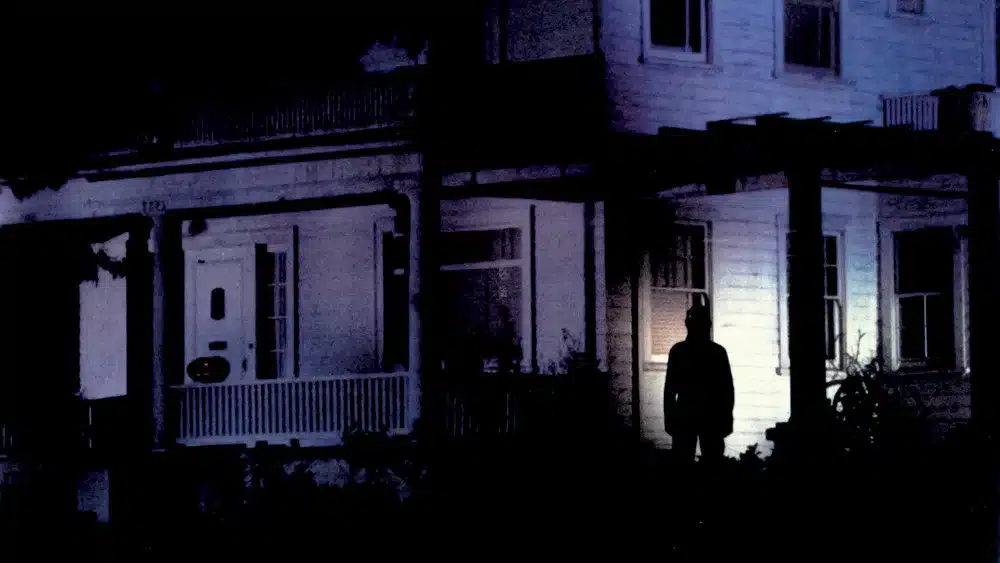
There’s something almost unfair about how effortlessly Carpenter creates tension. Michael Myers can be standing halfway down a residential street, doing absolutely nothing, and the scene becomes unsettling. Dean Cundey’s cinematography gives the neighborhoods a quiet, ordinary appearance while leaving just enough darkness in the frame to make you wonder what’s hiding there. The movie understands that anticipation can be far more frightening than anything actually happening.
Jamie Lee Curtis Gives Us Laurie Strode
Laurie isn’t introduced as an action hero. She’s thoughtful, responsible and a little more reserved than her friends. Curtis makes her instantly believable, which becomes increasingly important as the evening takes a turn. Meanwhile, Donald Pleasence brings an almost theatrical urgency to Dr. Loomis, a man who spends much of the movie trying to convince people that something terrible is coming. Between the two performances, Carpenter gives us characters worth caring about before the suspense really tightens.
The Music Does Half the Scaring
Carpenter composed the score himself, and those instantly recognizable piano notes have become inseparable from Michael Myers. Simple, repetitive and incredibly effective. It doesn’t tell you exactly what’s going to happen. It tells you something might happen at any second. Combined with Carpenter’s patient camera work, the music turns ordinary hallways, sidewalks and bedroom windows into places where you suddenly don’t want to be alone.
Carpenter wasn’t finished with the darkness. Two years after Halloween, John Carpenter returned with another atmospheric nightmare, this time involving a coastal town and something approaching through the mist. Rewind to our The Fog (1980) VHS Vault for another reminder that Carpenter didn’t need elaborate effects to keep an audience looking over its shoulder.
Rewind or Fast Forward?
Rewind. Every Halloween. John Carpenter’s Halloween remains one of the finest examples of how much a horror movie can accomplish with atmosphere, patience and a genuinely unsettling villain. Jamie Lee Curtis and Donald Pleasence give the film its human center, Dean Cundey makes ordinary streets look threatening, and Carpenter’s music does the rest. There may be louder, bloodier and more elaborate slashers on the shelf, but very few understand the power of a figure standing silently in the background quite like this one.
Halloween (1978) Official Trailer
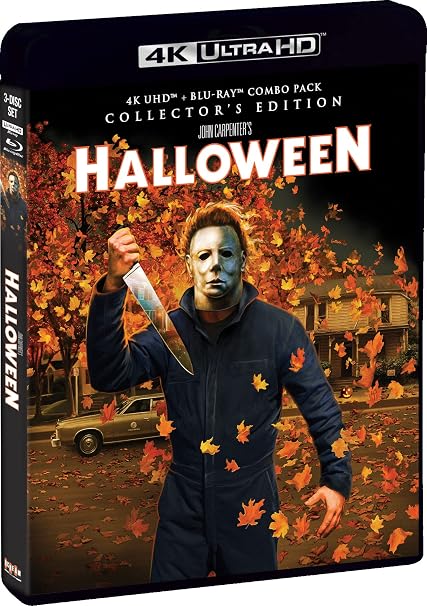
For the Collection
Halloween (1978) – Scream Factory 4K Collector’s Edition
Some movies deserve more than an annual rental. Scream Factory’s 4K Collector’s Edition brings John Carpenter’s original Halloween home with a restoration from the original camera negative approved by cinematographer Dean Cundey, along with audio commentaries and a collection of special features. For a film built around shadows, atmosphere and that unforgettable white mask, this is a fitting addition to the horror shelf.
Check Out the 4K Collector’s EditionAs an Amazon Associate, Fresh Thrills earns from qualifying purchases.
You Might Also Like
 The Fog (1980)
 Friday the 13th (1980)
Made it through Halloween night? Good. Keep an eye on the shadows and grab another tape.
Return to the VHS Vault